
The Ultimate Guide to Kashayam Vasthi: Benefits, Procedure, and What to Expect
Living with persistent lower back pain, chronic constipation, bloating, sciatica, or unexplained fatigue can gradually affect every aspect of daily life. While modern medicine often focuses on managing symptoms, Ayurveda seeks to identify and correct the underlying imbalance responsible for these conditions. One of the most effective therapies prescribed for deep-rooted Vata disorders is Kashayam Vasthi, a cornerstone of the Panchakarma detoxification process.
Often regarded as one of the most important therapies in Ayurvedic Panchakarma, Kashayam Vasthi is much more than a conventional enema. Unlike a medical enema, which is primarily intended to empty the bowel, Kashayam Vasthi is a carefully designed therapeutic procedure that delivers a combination of herbal decoctions, medicated oils, and other classical ingredients into the colon for systemic healing. Its purpose extends beyond bowel cleansing to restoring the body’s natural balance, improving neurological health, supporting digestion, and promoting tissue nourishment.
According to Ayurveda, the large intestine is the principal seat of Vata Dosha, the biological force governing movement, nervous system functions, circulation, elimination, respiration, and musculoskeletal health. When Vata becomes aggravated, it can manifest as joint pain, dry skin, constipation, anxiety, insomnia, degenerative disorders, and neurological conditions. By targeting the colon—the primary site of Vata—Kashayam Vasthi helps restore physiological balance throughout the body.
As one of the most important cleansing procedures in Panchakarma, Kashayam Vasthi assists in removing accumulated metabolic toxins (Ama), improving digestive efficiency, strengthening bodily tissues, and enhancing overall vitality. When performed under the supervision of experienced Ayurvedic physicians, it becomes a comprehensive therapy that supports both physical and mental well-being rather than simply addressing isolated symptoms.
What is Kashayam Vasthi and Its Role in Panchakarma?
Kashayam Vasthi, also known as Niruha Basti or Asthapana Vasti, is a classical Ayurvedic therapeutic procedure that uses an aqueous herbal decoction prepared with specific medicinal ingredients. It is traditionally used to help balance aggravated Vata Dosha, support elimination, and assist in the removal of accumulated Ama according to Ayurvedic principles.
Unlike an ordinary enema that typically uses plain water or saline for bowel evacuation, Kashayam Vasthi involves a carefully formulated medicinal preparation prepared according to classical Ayurvedic texts. The therapeutic mixture generally contains:
- Honey
- Rock salt
- Medicated oils
- Ghee
- Freshly prepared herbal decoctions
Each ingredient performs a specific therapeutic role. Honey acts as a natural emulsifier, helping blend oil-based and water-based ingredients into a stable medicinal mixture. Rock salt facilitates the penetration and distribution of the herbal formulation while supporting the movement of aggravated Vata. Medicated oils and ghee provide lubrication, protect the intestinal mucosa, and nourish body tissues. The herbal decoctions, prepared from carefully selected medicinal plants, are chosen according to the patient’s constitution (Prakriti), disease condition, age, digestive strength, and degree of doshic imbalance.
Ayurveda explains that disease often begins with impaired digestion, resulting in the formation of Ama—sticky metabolic waste that obstructs the body’s physiological channels (Srotas). As Ama accumulates alongside aggravated Vata, it disrupts normal tissue function and contributes to pain, inflammation, digestive disorders, neurological dysfunction, and musculoskeletal degeneration.
Kashayam Vasthi works by helping loosen, mobilise, and eliminate these accumulated toxins while simultaneously restoring the natural movement of Vata Dosha. This dual action makes it one of the most comprehensive therapeutic interventions within Panchakarma.
Unlike therapies that focus solely on symptom relief, Kashayam Vasthi aims to address the underlying doshic imbalance, making it an important treatment option for a wide range of chronic and recurrent conditions.
The Science of Vata Dosha and Kashayam Vasthi
Among the three doshas described in Ayurveda—Vata, Pitta, and Kapha—Vata Dosha is considered the primary governing force because it regulates all movement within the body. This includes nerve impulse transmission, muscle activity, circulation, respiration, elimination, speech, sensory perception, and mental functions. When Vata remains balanced, these physiological processes function harmoniously. However, when aggravated, Vata can give rise to numerous chronic disorders affecting multiple body systems.
Ayurveda identifies the large intestine (Pakwashaya) as the principal seat of Vata Dosha. Since the colon plays a central role in fluid absorption, waste elimination, and the regulation of intestinal movement, disturbances in this region can influence the entire body. Classical Ayurvedic physicians therefore developed Kashayam Vasthi as a targeted therapy that acts directly on the primary site of Vata imbalance.
From an Ayurvedic perspective, the medicated herbal decoction introduced into the colon is believed to support both local cleansing and systemic balance by acting on the primary site of Vata Dosha. Ayurveda explains that the colon plays an important role in maintaining the normal movement of Vata and the proper functioning of physiological channels. Modern physiology also recognises the important connection between the gut and nervous system through the enteric nervous system, which helps regulate digestive functions and communication between the gastrointestinal tract and the brain.
Ayurveda explains that by restoring balance within the colon, Kashayam Vasthi helps normalise the flow of Vata, allowing healthier coordination between the nervous system, digestive organs, muscles, joints, and skeletal tissues. This is why the therapy is traditionally recommended not only for constipation but also for neurological disorders, chronic musculoskeletal pain, degenerative spinal conditions, and disorders involving impaired movement.
The elimination of Ama further enhances the body’s natural healing mechanisms by improving tissue nourishment, reducing obstruction within the body’s physiological channels, and supporting the proper functioning of Agni, or digestive and metabolic fire. A balanced Agni enables efficient digestion, better nutrient assimilation, stronger immunity, and improved overall vitality.
Rather than acting as a simple bowel-cleansing procedure, Kashayam Vasthi represents a comprehensive Ayurvedic therapy designed to restore systemic balance by addressing one of the body’s most important regulatory centres—the colon.
Key Health Benefits of Undergoing a Kashayam Vasthi Therapy
One of the reasons Kashayam Vasthi is considered the cornerstone of Ayurvedic Panchakarma is its ability to address multiple health concerns through a single therapeutic approach. Rather than treating symptoms in isolation, the therapy aims to correct Vata imbalance, eliminate Ama, and restore the body’s natural physiological functions. As the colon is the primary seat of Vata dosha, cleansing and nourishing this region positively influences the nervous, digestive, musculoskeletal, and metabolic systems.
Some of the major health benefits of Kashayam Vasthi include:
• Relief from Lower Back Pain, Sciatica, and Intervertebral Disc Prolapse (IVDP)
According to Ayurveda, many chronic spinal disorders are associated with aggravated Vata dosha. Kashayam Vasthi helps pacify aggravated Vata while nourishing deeper tissues, including muscles, ligaments, joints, and bones.
As a result, it is traditionally recommended as part of the management plan for:
- Chronic lower back pain
- Sciatica
- Intervertebral Disc Prolapse (IVDP)
- Lumbar spondylosis
- Degenerative spinal conditions
- Sacroiliac joint dysfunction
When administered as part of a physician-supervised Panchakarma programme, the therapy may help reduce stiffness, improve mobility, and support spinal function.
• Helps Manage Digestive Disorders
Healthy digestion is the foundation of good health in Ayurveda. When Agni weakens, undigested food transforms into Ama, leading to gastrointestinal disturbances.
Kashayam Vasthi supports digestive health by helping manage:
- Chronic constipation
- Flatulence
- Abdominal bloating
- Irritable Bowel Syndrome (IBS)
- Irregular bowel movements
- Sluggish digestion
By removing accumulated Ama and balancing Vata, the therapy encourages smoother bowel movements and improved digestive efficiency.
• Supports Neurological Care
Since Vata dosha governs the nervous system, its imbalance can contribute to various neurological disorders. Classical Ayurvedic texts describe Kashayam Vasthi as one of the most effective therapies for supporting neurological function when prescribed appropriately.
It is traditionally used as part of the management of:
- Paralysis (Pakshaghata)
- Neuromuscular disorders
- Muscle weakness
- Poor nervous system coordination
- Certain degenerative neurological conditions
- Numbness and tingling associated with aggravated Vata
By addressing the root Vata imbalance, the therapy supports healthier nerve function and better neuromuscular coordination.
• Promotes Systemic Detoxification
One of the primary goals of Kashayam Vasthi is to support the elimination of accumulated Ama, described in Ayurveda as an incompletely digested metabolic residue that may obstruct the body’s physiological channels (Srotas).
According to Ayurvedic principles, Kashayam Vasthi may support:
- Clear blocked channels
- Improve tissue nourishment
- Enhance circulation
- Support healthy metabolism
- Restore physiological balance
- Promote overall vitality
• Improves Digestive Fire (Agni)
Healthy metabolism begins with balanced Agni. Following detoxification, the digestive fire functions more efficiently, allowing:
- Better nutrient absorption
- Improved digestion
- Enhanced tissue regeneration
- Increased energy levels
- Better immune function
• Supports Joint and Musculoskeletal Health
Because aggravated Vata often settles in joints and connective tissues, Kashayam Vasthi is traditionally recommended for individuals experiencing:
- Osteoarthritis
- Cervical spondylosis
- Frozen shoulder
- Joint stiffness
- Muscular tightness
- Degenerative musculoskeletal disorders
•Encourages Overall Mind-Body Balance
Ayurveda considers physical and mental health inseparable.
By restoring the normal movement of Vata dosha, Kashayam Vasthi may help support:
- Better sleep quality
- Mental calmness
- Reduced stress
- Improved energy
- Enhanced overall well-being
As with all Panchakarma procedures, the therapy should only be performed after a thorough clinical evaluation by a qualified Ayurvedic physician.
Why Srothas Ayurveda is the Premier Residential Ayurveda Treatment Centre in Kerala
Authentic Panchakarma therapies such as Kashayam Vasthi are best performed in a structured clinical environment under continuous professional supervision, where treatment can be customised according to individual health needs. At Srothas Ayurveda, every treatment is carefully planned according to classical Ayurvedic principles, ensuring each patient receives individualised care based on their unique health condition and body constitution.
As a trusted Ayurveda treatment centre in Kerala, Srothas Ayurveda combines traditional healing wisdom with professional clinical practice to deliver safe, authentic, and personalised Panchakarma therapies.
Individualised Treatment Plans
Every patient undergoes a comprehensive Ayurvedic consultation before beginning treatment. Certified Vaidyas assess factors such as:
- Prakriti (body constitution)
- Vikriti (current doshic imbalance)
- Digestive strength (Agni)
- Disease progression
- Lifestyle
- Medical history
This evaluation helps determine whether Kashayam Vasthi is appropriate and guides the preparation of a personalised treatment protocol.
Authentic Classical Preparations
Unlike standardised commercial formulations, the medicinal decoctions used at Srothas Ayurveda are freshly prepared according to classical Ayurvedic formulations prescribed by experienced physicians. The combination of herbal decoctions, medicated oils, ghee, honey, and rock salt is customised to suit each individual’s therapeutic requirements.
Certified Ayurvedic Vaidyas
Every Panchakarma procedure is supervised by qualified Ayurvedic physicians with extensive clinical experience. Their expertise ensures that the therapy is administered safely while continuously monitoring the patient’s response throughout the treatment course.
Residential Healing Environment
One of the greatest advantages of choosing a residential ayurveda treatment center in kerala is the opportunity to heal in a peaceful, stress-free atmosphere. External distractions, irregular eating habits, travel, and work-related pressures often interfere with the body’s healing process.
A residential Panchakarma programme allows patients to:
- Follow a physician-prescribed routine.
- Receive freshly prepared Ayurvedic meals.
- Maintain adequate rest
- Undergo scheduled therapies without interruption.
- Recover under continuous professional supervision.
Round-the-Clock Professional Care
The recovery period following Kashayam Vasthi is an essential part of the treatment. At Srothas Ayurveda, trained therapists and physicians closely observe each patient, ensuring proper hydration, dietary compliance, bowel response, and overall recovery.
This comprehensive approach helps support safe treatment practices and allows patients to receive the intended therapeutic benefits of Panchakarma.
For individuals seeking authentic Ayurvedic healing, Srothas Ayurveda offers an environment where traditional wisdom, personalised treatment, and compassionate care come together to support long-term wellness.
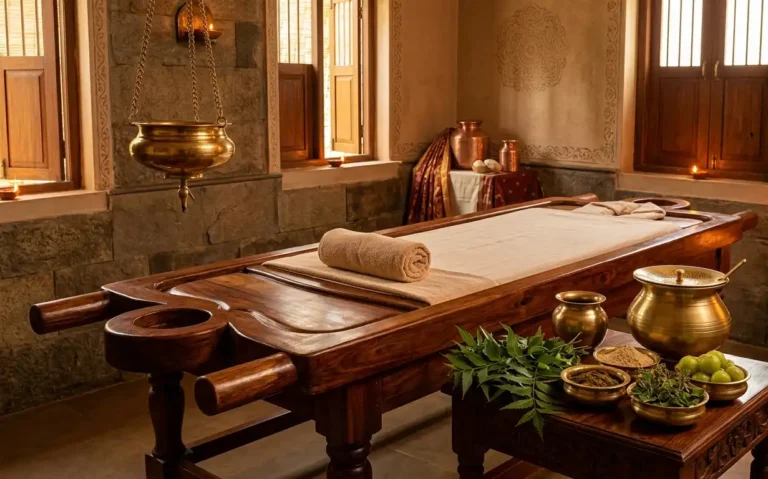
The Three Critical Stages of the Kashayam Vasthi Procedure
Understanding each stage of the procedure helps patients feel confident and prepared before beginning treatment. Kashayam Vasthi is not simply an enema but a carefully structured therapeutic process consisting of three sequential stages: Purva Karma, Pradhana Karma, and Paschat Karma.
1. Purva Karma (Preparation Phase)
Preparation is one of the most important aspects of successful Kashayam Vasthi therapy. Before administering the medicated herbal decoction, the body is gently prepared to facilitate the mobilization and elimination of toxins.
The session usually begins with Abhyangam, a synchronised full-body or localised oil massage lasting approximately 15–20 minutes. Warm medicated oils are selected according to the patient’s doshic imbalance and gently massaged into the body using rhythmic strokes.
The massage helps:
- Improve circulation
- Lubricate joints
- Relax muscles
- Pacify aggravated Vata dosha.
- Loosen deeply seated toxins.
Following Abhyangam, localised Swedana (therapeutic steam fomentation) is administered, particularly over the abdomen and lower back. The mild heat promotes sweating, dilates channels, softens tissues, and further mobilises Ama, preparing the colon for the main procedure.
By the end of Purva Karma, the body is relaxed, the digestive tract is prepared, and the medicated decoction can act more effectively.
2. Pradhana Karma (Main Procedure)
The patient is then escorted to the treatment room for the main Kashayam Vasthi procedure.
The medicated herbal decoction—containing Honey, rock salt, medicated oils, ghee, and herbal decoctions—is freshly prepared and brought to a lukewarm temperature before administration.
The patient is comfortably positioned in the left lateral position, with the left leg extended and the right knee gently flexed. This posture facilitates smooth entry of the medicated formulation into the colon.
Traditionally, Ayurveda describes the use of specialised instruments such as:
- Vasti Netram (the nozzle)
- Vasti Puta (the medicine bag or pouch)
Before insertion, the nozzle is lubricated with medicated oil to ensure patient comfort.
Patients are instructed to breathe out gently through an open mouth during insertion, which helps relax the pelvic muscles and minimises discomfort. The herbal decoction is then introduced slowly and steadily into the rectum.
Once the medicine has been administered, the nozzle is carefully removed, and the patient remains relaxed while the formulation begins its therapeutic action within the colon.
3. Paschat Karma (Post-Procedure Care)
Following administration, the patient lies comfortably in the supine position for several minutes.
The therapist may perform gentle abdominal strokes to facilitate even distribution of the medicine throughout the colon.
The urge for evacuation may occur within a short period after administration, often within approximately 1–10 minutes in many cases. However, the timing can vary depending on the patient’s condition, digestive strength, bowel function, and the physician’s treatment plan.
After complete elimination of the medicated fluid, patients are advised to:
- Cleanse the body comfortably.
- Take a warm water bath.
- Rest quietly.
- Follow the prescribed post-treatment diet.
- Avoid strenuous physical activity.
The post-procedure phase is carefully monitored because the body’s digestive fire and physiological balance continue to stabilise after the therapy.
Who Should and Should Not Choose a Kashayam Vasthi Treatment?
Although Kashayam Vasthi is regarded as one of Ayurveda’s most effective Panchakarma therapies, it is not suitable for everyone. A qualified Ayurvedic physician (Vaidya) should always evaluate the patient’s Prakriti (body constitution), Vikriti (current doshic imbalance), digestive strength (Agni), age, medical history, and overall health before recommending the therapy. Proper patient selection helps maximise therapeutic benefits while minimising the risk of complications.
Who Can Benefit from Kashayam Vasthi?
Kashayam Vasthi is traditionally recommended for individuals with chronic Vata disorders and conditions where detoxification and dosha balancing are required. It may be advised as part of a comprehensive Panchakarma treatment plan for:
- Chronic lower back pain
- Arthritis, including osteoarthritis
- Sciatica
- Gout
- Rheumatism
- Intervertebral Disc Prolapse (IVDP)
- Chronic constipation
- Irritable Bowel Syndrome (IBS)
- Flatulence and abdominal bloating
- Neuromuscular degeneration
- Paralysis (as supportive Ayurvedic management)
- Cervical and lumbar spondylosis
- Muscle stiffness and joint disorders
- Generalised Vata imbalance
The exact treatment schedule, herbal formulation, and duration vary depending on the patient’s condition and should always be individualised by an experienced Vaidya.
Who Should Avoid Kashayam Vasthi?
Despite its therapeutic value, Kashayam Vasthi is contraindicated in certain situations because the procedure may aggravate existing conditions or increase health risks.
The therapy is generally not recommended for individuals with:
- Active haemorrhoids (bleeding piles)
- Rectal prolapse
- Fecal incontinence
- Acute diarrhea or severe dysentery
- Severe dehydration
- Serious or unstable cardiac conditions
- Acute fever or active systemic infections
- Severe abdominal pain of unknown origin
- Elderly individuals, especially those above 70 years of age, require careful assessment and strict medical supervision before undergoing the therapy.
- Pregnant women, severely debilitated individuals, and patients recovering from major surgery should only undergo Panchakarma therapies if specifically advised by an experienced Ayurvedic physician.
Because every individual responds differently, Kashayam Vasthi should never be self-administered or performed without professional supervision.
Crucial Do's and Don'ts to Follow During Your Kashayam Vasthi Cleanse
Do’s
- Have a light dinner and sleep early the night before the procedure.
- Stay calm, relaxed, and follow your therapist’s instructions throughout the treatment.
- Relax fully and allow the medicine to eliminate naturally.
- Drink warm water only if recommended by your physician.
- Rest in your room for the remainder of the day after therapy.
- Follow the prescribed post-treatment diet carefully.
Don’ts
- Do not eat or drink anything (except a small amount of water if advised) immediately before the procedure.
- Do not exert yourself or strain to force the medicated fluid out. Allow natural evacuation.
- Avoid heavy physical exercise, lifting weights, or strenuous activities.
- Avoid cold foods, refrigerated drinks, and heavy meals immediately after treatment.
- Avoid excessive walking, swimming, travelling, or prolonged standing.
- Avoid excessive screen time, gadgets, heavy talking, mental stress, and late-night sleep.
Optimal Diet and Nutrition Practices Post Kashayam Vasthi
One of the most important aspects of Panchakarma is the gradual restoration of Agni, or digestive fire, after detoxification. Following Kashayam Vasthi, digestion is temporarily delicate, and consuming heavy, oily, spicy, or processed foods too soon may interfere with recovery.
For this reason, Ayurvedic physicians recommend easily digestible, warm, freshly prepared foods immediately after the procedure.
The ideal post-treatment meal may include:
- Warm rice kanji (rice gruel)
- Freshly prepared khichdi
- Light dal soup
- Soft-cooked rice with thin lentil soup
- Warm vegetable broth (if advised)
These foods are gentle on the digestive system, help prevent abdominal cramps, replenish fluids, and support the gradual restoration of digestive strength.
This dietary progression is known in Ayurveda as Samsarjana Karma, a carefully planned process of gradually reintroducing regular foods after Panchakarma. The duration of Samsarjana Karma depends on the patient’s digestive capacity, treatment intensity, and the physician’s recommendations.
Patients are generally advised to avoid:
- Fried foods
- Processed foods
- Bakery products
- Cold beverages
- Carbonated drinks
- Alcohol
- Excessively spicy foods
- Heavy meat preparations
Adequate hydration with warm water and sufficient rest further support recovery while allowing the body to regain normal digestive function.
Comparing Kashayam Vasthi vs. Anuvasana Vasthi: What’s the Difference?
Many people assume that all Ayurvedic enemas are the same. In reality, classical Ayurveda describes different types of Basti therapies, each serving a unique therapeutic purpose. Two of the most commonly prescribed are Kashayam Vasthi (also called Niruha Basti) and Anuvasana Vasthi, sometimes referred to as Matravasti when administered in smaller quantities.
Although both therapies are delivered through the rectal route, their objectives, ingredients, and actions differ significantly.
| Kashayam Vasthi | Anuvasana Vasthi |
|---|---|
Uses a medicated herbal decoction as the primary ingredient. |
Uses medicated oils as the primary therapeutic medium. |
Primarily cleansing and detoxifying. |
Primarily nourishing and lubricating |
Helps eliminate accumulated Ama and aggravated Vata |
Helps nourish tissues and pacify dry, depleted Vata conditions |
Generally retained for a short duration before evacuation |
Usually retained for a much longer period and may be absorbed gradually |
Supports detoxification and dosha elimination |
Supports tissue nourishment, lubrication, and rejuvenation |
In classical Panchakarma practice, physicians often alternate Kashayam Vasthi and Anuvasana Vasthi in carefully designed treatment schedules. This combination provides both cleansing and nourishment, allowing detoxification without excessively depleting the body’s tissues.
The sequence, number of sessions, and medicinal formulations are always customised according to the patient’s diagnosis and treatment goals.
Common Myths Surrounding the Kashayam Vasthi Process Debunked
Despite being one of Ayurveda’s most respected therapies, Kashayam Vasthi is often misunderstood. Misconceptions about the procedure can prevent people from seeking treatment even when it may be clinically appropriate.
Myth 1: “Is Kashayam Vasthi painful?”
Fact: No. When administered by trained therapists, the procedure is generally gentle and well tolerated. The nozzle (Vasti Netram) is lubricated with medicated oil before insertion, and patients are guided through proper positioning and breathing techniques to maximise comfort.
Myth 2: “Is it just a glorified water enema?”
Fact: Absolutely not. Unlike a conventional enema, Kashayam Vasthi contains a carefully prepared combination of Honey, rock salt, medicated oils, ghee, and herbal decoctions formulated specifically for the patient’s condition. Its objective extends beyond bowel evacuation to include systemic detoxification, dosha balancing, tissue nourishment, and metabolic support.
Myth 3: “Is Kashayam Vasthi only for stomach problems?”
Fact: No. Although the therapy is administered through the colon, Ayurveda recognises the colon as the principal seat of Vata dosha, which governs movement, the nervous system, joints, muscles, and musculoskeletal functions. This is why Kashayam Vasthi is traditionally recommended not only for digestive concerns but also as part of Ayurvedic management approaches for chronic lower back pain, sciatica, arthritis, neurological conditions, and various musculoskeletal disorders.
Myth 4: “Can I perform Kashayam Vasthi at home?”
Fact: No. The preparation of the medicinal formulation, patient assessment, administration technique, retention time, and post-procedure monitoring all require professional expertise. Attempting the therapy without medical supervision may lead to complications or ineffective treatment.
Expected Timelines and Recovery Patterns After Kashayam Vasthi
Understanding what happens after Kashayam Vasthi helps patients feel more comfortable and prepared throughout the healing process. Since this therapy works by eliminating accumulated Ama, balancing aggravated Vata dosha, and supporting the body’s natural cleansing mechanisms, the response after treatment can vary from person to person depending on factors such as age, digestive strength (Agni), health condition, diet, and the individual’s overall constitution (Prakriti).
Unlike a regular bowel-cleansing procedure, the effects of Kashayam Vasthi are not limited to immediate evacuation. Ayurveda considers it a therapeutic process that continues to influence the body’s internal balance even after the elimination of the medicated decoction.
Immediate Response After Kashayam Vasthi
After the completion of the procedure, most individuals experience the urge to evacuate the administered medicine within a short period. In many cases, bowel elimination may occur within approximately 1–10 minutes, although the timing can differ based on the individual’s digestive strength, bowel condition, and the specific formulation used.
The initial evacuation helps eliminate the administered herbal decoction and supports the removal of waste materials while assisting the body’s natural cleansing process according to Ayurvedic principles.
Following evacuation, patients may feel a sense of lightness in the abdomen and overall relaxation. Some individuals may also experience temporary tiredness, which is a normal response as the body adapts after a cleansing therapy.
Bowel Movement Changes After Treatment
Changes in bowel habits after Kashayam Vasthi are generally considered a normal part of the body’s adjustment process. Since the therapy influences intestinal movement and elimination patterns, bowel responses may vary.
Some commonly observed patterns include:
Loose Stools for a Few Hours
Some patients may experience mild loose stools or repeated bowel movements for a short period after the procedure as the body completes the elimination process. This occurs as the body completes the elimination process initiated by the therapy.
During this period, patients are advised to:
- Maintain adequate rest
- Consume only the prescribed diet.
- Drink warm fluids as recommended.
- Avoid unnecessary physical activity.
Temporary Constipation for 1–2 Days
In some cases, individuals may experience mild constipation for 1–2 days after the therapy. This temporary change may occur as the digestive system gradually returns to its normal rhythm after cleansing.
Following the physician’s dietary recommendations, including easily digestible foods such as warm rice gruel (kanji), light khichdi, and simple meals, helps restore healthy digestion.
Recovery During the Following Days
The recovery period after Kashayam Vasthi is an essential phase of Panchakarma. The body requires adequate rest and proper nourishment to stabilise the changes initiated during treatment.
Patients are generally advised to:
- Follow the prescribed Samsarjana Karma diet plan.
- Avoid excessive physical exertion.
- Maintain proper sleep patterns.
- Avoid exposure to extreme cold or stress.
- Continue physician-recommended therapies if part of a longer Panchakarma programme.
The improvement experienced after Kashayam Vasthi depends on the individual’s health condition and treatment objective. Some people may notice changes in digestion, bowel regularity, or physical comfort early, while chronic conditions may require multiple sessions as advised by an Ayurvedic physician.
Factors That Influence Recovery After Kashayam Vasthi
The recovery pattern after therapy depends on several individual factors, including:
• Nature of the Health Condition
Individuals undergoing treatment for long-standing conditions such as chronic back pain, Sciatica, arthritis, or degenerative disorders may require a structured Panchakarma schedule rather than a single session.
• Digestive Strength (Agni)
A strong and balanced Agni supports faster adaptation after detoxification. Patients with weaker digestion may require a more gradual dietary progression.
• Body Constitution (Prakriti)
Each person’s response varies according to their unique Ayurvedic constitution. A Vata-dominant individual may require additional nourishment and care after cleansing therapies.
• Compliance With Post-Treatment Guidelines
Following the recommended diet, rest, and lifestyle instructions plays a significant role in maintaining the benefits of Kashayam Vasthi.
How to Schedule a Professional Consultation for Kashayam Vasthi
Choosing the right Ayurvedic facility and physician is essential when undergoing a specialised Panchakarma therapy like Kashayam Vasthi. Since the treatment requires careful assessment, customised medicine preparation, correct administration techniques, and proper post-treatment monitoring, it should always be performed under the guidance of qualified Ayurvedic professionals.
At Srothas Ayurveda, every patient begins their healing journey with a detailed Ayurvedic consultation. Experienced Vaidyas evaluate the individual’s:
- Prakriti (natural body constitution)
- Vikriti (current health imbalance)
- Digestive strength (Agni)
- Lifestyle factors
- Medical history
- Specific health concerns
Based on this assessment, a personalised treatment plan is designed to determine whether Kashayam Vasthi is suitable and how it should be incorporated into the overall Panchakarma programme.
As a trusted Ayurveda treatment centre in Kerala, Srothas Ayurveda provides authentic Ayurvedic therapies in a calm residential environment where patients receive continuous professional guidance throughout their healing journey.
Personalised Panchakarma Treatment Courses
The duration of treatment varies according to individual requirements. Depending on the health condition and physician assessment, a customised programme may include:
- 8-day Panchakarma treatment
- 15-day Panchakarma treatment
- 21-day Panchakarma treatment
Each programme is carefully structured with appropriate preparation therapies, main procedures, dietary recommendations, and recovery support.
The combination of traditional Ayurvedic knowledge, experienced Vaidyas, customised herbal preparations, and attentive care ensures that every patient receives a treatment approach aligned with their specific health needs.
Frequently Asked Questions
Can therapeutic enemas cure lower back pain permanently?
Kashayam Vasthi is traditionally used in Ayurveda to support the management of lower back conditions associated with aggravated Vata dosha. Its effectiveness depends on individual health factors, and treatment should be recommended after evaluation by a qualified Ayurvedic physician.
What is the meaning of the terms Basti and Vasti?
Basti and Vasti are different spellings for the same Ayurvedic therapy, derived from the Sanskrit term associated with the urinary bladder. Traditionally, bladder pouches were used to hold medicines, while modern specialised instruments are used for safe administration.
Can I perform a decoction enema at home safely?
No. Kashayam Vasthi should only be performed under the guidance of trained Ayurvedic professionals, as proper preparation, dosage, administration, and monitoring are essential for safety and effectiveness.
Ready to experience deep detoxification and absolute relief from chronic pain? Book a professional consultation at Srothas Ayurveda today, and let our expert Vaidyas curate a personalized treatment journey just for you.
At Srothas Ayurveda, traditional Ayurvedic wisdom meets personalised care, creating a supportive environment where authentic Panchakarma therapies are performed with precision, compassion, and clinical expertise. Begin your journey towards improved balance, vitality, and holistic wellness with a trusted Ayurveda treatment centre in Kerala.